
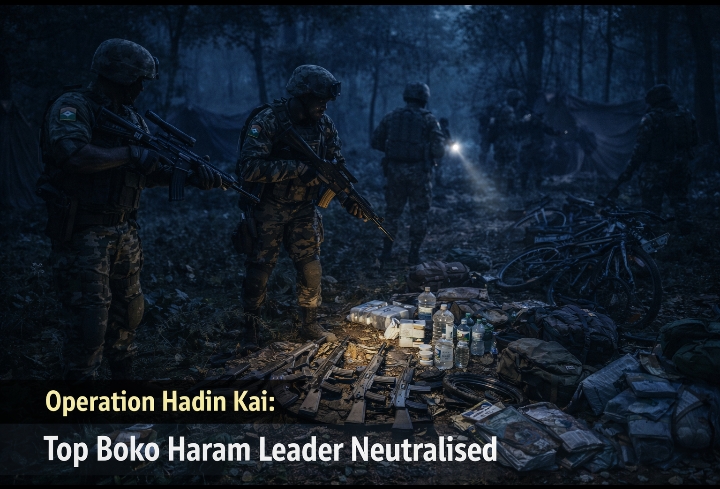
Troops of Operation Hadin Kai have recorded another major breakthrough in the ongoing counter-terrorism campaign in Nigeria’s North-East, following the elimination of a high-ranking Boko Haram leader and several other insurgents during a coordinated night operation in Borno State.
Military sources confirmed that the operation led to the neutralisation of a senior Boko Haram figure described as the group’s second-in-command within the Sambisa Forest enclave. The insurgent leader, identified as Abu Khalid, was killed alongside 10 other fighters during the raid.
Join Our WhatsApp Group for Daily Updates
Click to Join WhatsApp GroupThe encounter reportedly took place in the Komala general area of Sambisa Forest, which falls under Konduga Local Government Area of Borno State. The operation was carried out late Saturday night, with troops engaging the terrorists at about 11:00 p.m. following credible intelligence on their movements and hideouts.
Confirming the development in a statement released on Sunday, the Media Information Officer of the Joint Task Force, North East Operation Hadin Kai, Lieutenant Colonel Sanni Uba, described the operation as a significant operational success in the fight against terrorism in the region.
According to the statement, troops of the Joint Task Force (North East), operating under Operation Hadin Kai, successfully conducted the night offensive that resulted in the killing of Abu Khalid, who was regarded as a key figure within Boko Haram’s leadership structure in the Sambisa axis.
Lieutenant Colonel Uba explained that Abu Khalid played a central role in coordinating attacks, logistics, and movements of fighters within the forest, making him a high-value target for security forces. His elimination, the military believes, will disrupt the operational capabilities of terrorist elements still active in the area.
The military spokesperson noted that the latest success came less than 24 hours after troops had neutralised another notorious Boko Haram/ISWAP commander, identified as Julaibib, who was operating within the Gujba axis of the Timbuktu Triangle.
He said troops of Sector 1, working in close collaboration with members of the Civilian Joint Task Force (CJTF) under Operation Desert Sanity, made contact with the terrorists during the night assault in Komala. The joint operation led to a fierce exchange before the insurgents were overpowered.
Following the engagement, troops recovered several items believed to have been used by the terrorists. These included five AK-47 rifles, multiple magazines, bicycles suspected to be used for mobility within forested areas, assorted logistics supplies, food items, and a large quantity of medical consumables.
The military confirmed that no casualties were recorded among the troops involved in the operation, a development described as a morale booster for personnel participating in ongoing clearance efforts across the region.
Lieutenant Colonel Uba stated that the confidence and fighting spirit of the troops remain high, as operations continue across known terrorist strongholds, including the Sambisa Forest, Mandara Mountains, the Timbuktu Triangle, and other identified hideouts in the North-East.
He further reassured Nigerians that the Joint Task Force remains committed to sustaining pressure on Boko Haram and ISWAP elements until all remaining threats are eliminated and lasting peace is restored to affected communities.
The statement also conveyed commendation from the Military High Command, which praised the troops for their resilience, professionalism, and sacrifices in confronting terrorism and related criminal activities in the region. The High Command urged personnel to maintain the current operational momentum.
Meanwhile, earlier reports indicated that on January 30, 2026, troops of Operation Hadin Kai had killed Julaibib, a top ISWAP commander operating around the Gujba axis of the Timbuktu Triangle, during a separate encounter near Kimba in Damboa Local Government Area of Borno State.
In another operation conducted around the same period, troops working alongside the Civilian Joint Task Force reportedly neutralised three additional terrorists during an ambush between Ngazalgana and Lamusheri communities in Borno State.
Security analysts say the recent string of successful operations signals renewed momentum in military efforts to degrade terrorist networks and dismantle their command structures across the North-East.
Residents of affected communities have continued to express cautious optimism, hoping that sustained military action will lead to improved security, allow displaced persons to return home, and restore economic activities that have been disrupted by years of insurgency.
The military has reiterated its resolve to continue intelligence-driven operations while working closely with local vigilante groups and community stakeholders to deny terrorists freedom of movement and operational space in the region.